
For the English Version, please scroll down!
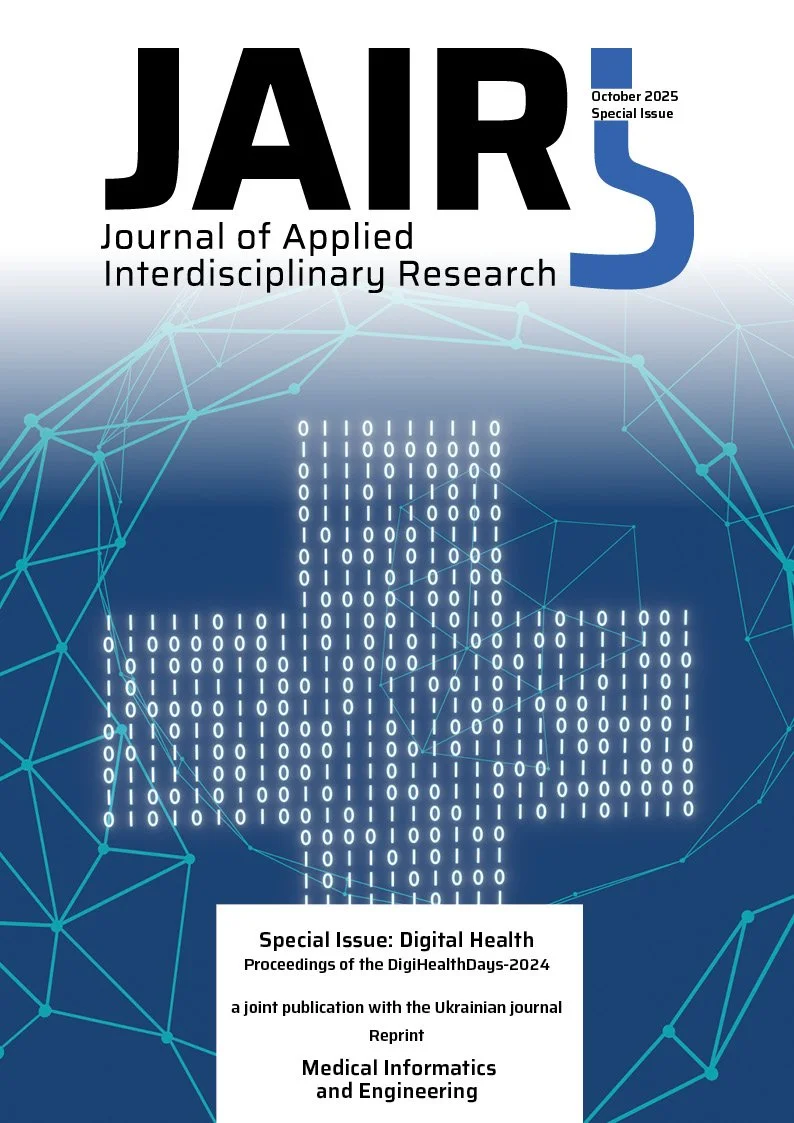
Cover of the JAIRS Special Issue - Foto by Birgit Bauer
DSL DE ist mit einer neuen Publikation im Journal of Applied Interdisciplinary Research (JAIR) vertreten – erschienen in der Special Issue „Digital Health“ (Oktober 2025).
Beim DigiHealthDayS 2024 im November 2024 in Pfarrkirchen am European Campus Rottal-Inn (ECRI) der Deggendorf Institute of Technology (DIT) haben DSL-DE-Gründerin Birgit Bauer und Beiratsmitglied PD Benjamin Friedrich in einer Session darüber gesprochen, was echte Beteiligung von Patient:innen und Bürger:innen in der digitalen Gesundheit bedeutet – jenseits von Symbolik.
Aus dieser Diskussion ist nun unser Beitrag im Special Issue „Digital Health“ des JAIR entstanden. Der Artikel ist auf Seite 102 erschienen und Open Access verfügbar.
Warum das Thema zentral ist
Digitale Gesundheit scheitert selten an Technologie.
Sie scheitert häufiger an:
fehlender Einbindung
unklaren Rollen
mangelndem Vertrauen
fehlender Gesundheitsdatenkompetenz
Und manchmal auch daran, dass Menschen auf Daten reduziert werden. Statistiken sind wichtig – aber Menschen mit Erkrankungen und auch gesunde Bürger:innen sind mehr als Zahlen. Qualität entsteht dann, wenn Daten und Erfahrung zusammengebracht werden.
Wenn Patient:innen nur informiert, aber nicht strukturell eingebunden werden, entstehen Lösungen, die technisch funktionieren – aber gesellschaftlich nicht tragen.
Genau hier setzt Data Saves Lives Deutschland (DSL DE) an.
Von der Diskussion zur strukturellen Arbeit
Beim DigiHealthDayS 2024 wurde die Perspektive von Patient:innen und Bürger:innen nicht nur diskutiert – sie wurde aktiv eingebracht.
Birgit Bauer ist Mitglied im DigiHealthDay Advisory Board und bringt diese Perspektive kontinuierlich in die inhaltliche Weiterentwicklung des DigiHealthDayS ein.
Auch unser DSL-DE-Beiratsmitglied PD Benjamin Friedrich war Teil der Diskussion.
Diese Verbindung von Praxis, Wissenschaft und Bürger:innenperspektive ist kein Zufall – sie ist unser Arbeitsprinzip. Wir sprechen nicht nur über Gesundheitsdaten und Digitalisierung, sondern auch darüber, wie Anliegen aufgenommen, ernst genommen und strukturell umgesetzt werden können.
Die DigiHealthDayS Family
Viele von uns sprechen von der „DigiHealthDayS Family“. Und das bewusst.
Weil es sich nicht nur wie eine Konferenz anfühlt, sondern wie ein Netzwerk, das sich gegenseitig unterstützt, kritisch reflektiert und gemeinsam weiterdenkt – auch über das Event hinaus.
Ein besonderer Dank geht an Prof. Dr. med. Georgi Chaltikyan und das gesamte DigiHealthDayS-2024-Team für den großartigen Kongress, die Offenheit für unterschiedliche Perspektiven und die kontinuierliche Unterstützung.
Diese Form von Zusammenarbeit ist ein echter Möglichmacher für nachhaltige Digital Health.
Unser Fazit
Co-Creation ist kein Risiko – insbesondere in komplexen Digital-Health-Projekten. Sie ist Qualitätsmerkmal.
Partizipation und Beteiligung machen insbesondere in Bezug auf Nutzbarkeit, Akzeptanz und Nachhaltigkeit einen entscheidenden Unterschied – insbesondere bei Projekten, die für Patient:innen und Bürger:innen entwickelt werden.
Wer Zielgruppen frühzeitig einbindet, reduziert Reibungsverluste, erhöht Akzeptanz und verbessert die tatsächliche Nutzbarkeit. Beteiligung ist damit kein Add-on, sondern ein Qualitätsinstrument.
Digitale Gesundheit braucht Technologie.
Aber sie braucht vor allem Menschen, die sie verstehen, mitgestalten und ihr vertrauen können.
Was die Session deutlich gemacht hat: Partizipation, Information und Transparenz müssen strukturell in Entwicklungsprozesse verankert werden.
Gerade Menschen mit Erkrankungen bringen die „lived experience“ mit, die notwendig ist, um Innovationen in alltagstaugliche, tatsächlich genutzte Anwendungen zu überführen – und so Daten nicht nur zu sammeln, sondern in bessere Versorgung zu übersetzen.
Hier geht es zur Online Ausgabe von JAIRs und unserem Beitrag: https://jas.bayern/index.php/jair/issue/archive
English Version
Engaging Patients and Citizens in Digital Health – More Than a Buzzword
DSL DE is represented with a new publication in the Journal of Applied Interdisciplinary Research (JAIR) – published in the Special Issue “Digital Health” (October 2025).
At DigiHealthDayS 2024 in November 2024 in Pfarrkirchen at the European Campus Rottal-Inn (ECRI) of the Deggendorf Institute of Technology (DIT), DSL DE founder Birgit Bauer and advisory board member PD Benjamin Friedrich spoke in a session about what meaningful participation of patients and citizens in digital health truly means – beyond symbolism.
This discussion has now resulted in our contribution to the JAIR Special Issue “Digital Health.” The article appears on page 102 and is available Open Access.
Why This Topic Matters
Digital health rarely fails because of technology.
It fails more often because of:
lack of meaningful involvement
unclear roles
insufficient trust
limited health data literacy
And sometimes because people are reduced to data points. Statistics are important – but people living with illness, and citizens in general, are more than numbers. Quality emerges when data and lived experience are brought together.
If patients are merely informed but not structurally involved, solutions may function technically – but they will not be sustainable socially.
This is exactly where Data Saves Lives Deutschland (DSL DE) positions its work.
From Discussion to Structural Engagement
At DigiHealthDayS 2024, the patient and citizen perspective was not only discussed – it was actively represented.
Birgit Bauer is a member of the DigiHealthDay Advisory Board and continuously contributes this perspective to the ongoing development of DigiHealthDayS.
Our DSL DE advisory board member PD Benjamin Friedrich also participated in the discussion.
This connection between practice, science, and the citizen perspective is no coincidence – it is our working principle. We do not only speak about health data and digitalisation; we also address how concerns can be heard, taken seriously, and structurally embedded into development processes.
The DigiHealthDayS Family
Many of us speak of the “DigiHealthDayS Family.” And we do so intentionally.
Because it does not feel like just another conference, but rather like a network that supports each other, reflects critically, and continues the conversation beyond the event itself.
Our sincere thanks go to Prof. Dr. med. Georgi Chaltikyan and the entire DigiHealthDayS 2024 team for an outstanding congress, for their openness to diverse perspectives, and for their continued support.
This kind of collaboration is a true enabler of sustainable digital health.
Our Conclusion
Co-creation is not a risk – particularly in complex digital health projects. It is a quality feature.
Participation and engagement make a decisive difference, especially with regard to usability, acceptance, and sustainability – particularly in projects designed for patients and citizens.
Involving target groups early reduces friction, increases acceptance, and improves real-world usability. Participation is therefore not an add-on, but a quality instrument.
Digital health needs technology.
But above all, it needs people who understand it, shape it, and trust it.
What the session clearly demonstrated: participation, information, and transparency must be structurally embedded in development processes.
People living with illness bring the “lived experience” that is necessary to translate innovation into practical, everyday applications – and to ensure that data is not only collected, but transformed into better care.
You can access the full contribution in the JAIR Special Issue “Digital Health” here: https://jas.bayern/index.php/jair/issue/archive
